Can I Clean My Curtains at Home or Should I Hire a Professional?

Updated: 5 days ago
By the team at American Steamers, cleaning delicate textiles in South Florida since 2006

If you've ever stood in front of your curtains wondering whether to yank them down and toss them in the washing machine, you're not alone. It's one of the most common questions we get. And the honest answer is: it depends, but more often than not, calling a professional is the right call.
Here's everything you need to know before you touch your drapes.
The Mistake That Ruins More Curtains Than Anything Else
In twenty years of cleaning delicate textiles, we've seen a lot of DIY curtain disasters. But the single most common one? Homeowners using over-the-counter cleaning solutions with high pH levels, and then not rinsing them out properly.
Most household fabric cleaners aren't formulated for drapery. They're too harsh, and without a proper rinsing agent and extraction process, the residue left behind can degrade the fibers, leave streaks, and cause long-term damage that's hard to reverse. What looks like a clean curtain may actually be a curtain that's been quietly damaged.
Fabrics You Should Never Clean Yourself
Some materials are simply too risky to DIY. At the top of that list:
White fabrics are notorious for developing yellow marks after improper home cleaning. The culprit is usually a combination of the wrong cleaning product and heat, and once that yellowing sets in, it's very difficult to reverse.
Silk and silky materials are equally unforgiving. Improper cleaning can cause permanent discoloration, leaving your elegant drapes looking blotchy and faded.
If your curtains fall into either of these categories, don't risk it. The cost of professional cleaning is a fraction of what you'd spend replacing them.
When DIY Is Actually Fine
To be fair, not all curtains need a professional touch. If your curtains are made from synthetic, machine-washable fabric, you can generally clean them at home safely, provided you follow the care label closely, use a gentle cycle with cold water, and avoid high heat in the dryer.
The key word is synthetic. Polyester, nylon, and similar man-made fabrics are far more forgiving than natural fibers. When in doubt, check the tag. If it says machine washable, you're likely in the clear.
A Real-Life Example of What Can Go Wrong
One of our clients decided to wash their curtains themselves. They came out heavily wrinkled and, worse, visibly shrunken. The curtains no longer reached the floor the way they were supposed to.
When they called us, we were able to clean them properly, press and steam them back into shape, and carefully open the seams to restore the lost length. The curtains were saved. But it was a close call, and completely avoidable.
That's the thing about DIY curtain cleaning gone wrong: sometimes it's fixable, and sometimes it's not.
What a Professional Actually Does Differently
The difference between a professional drapery cleaner and a home wash isn't just equipment, it's knowledge.
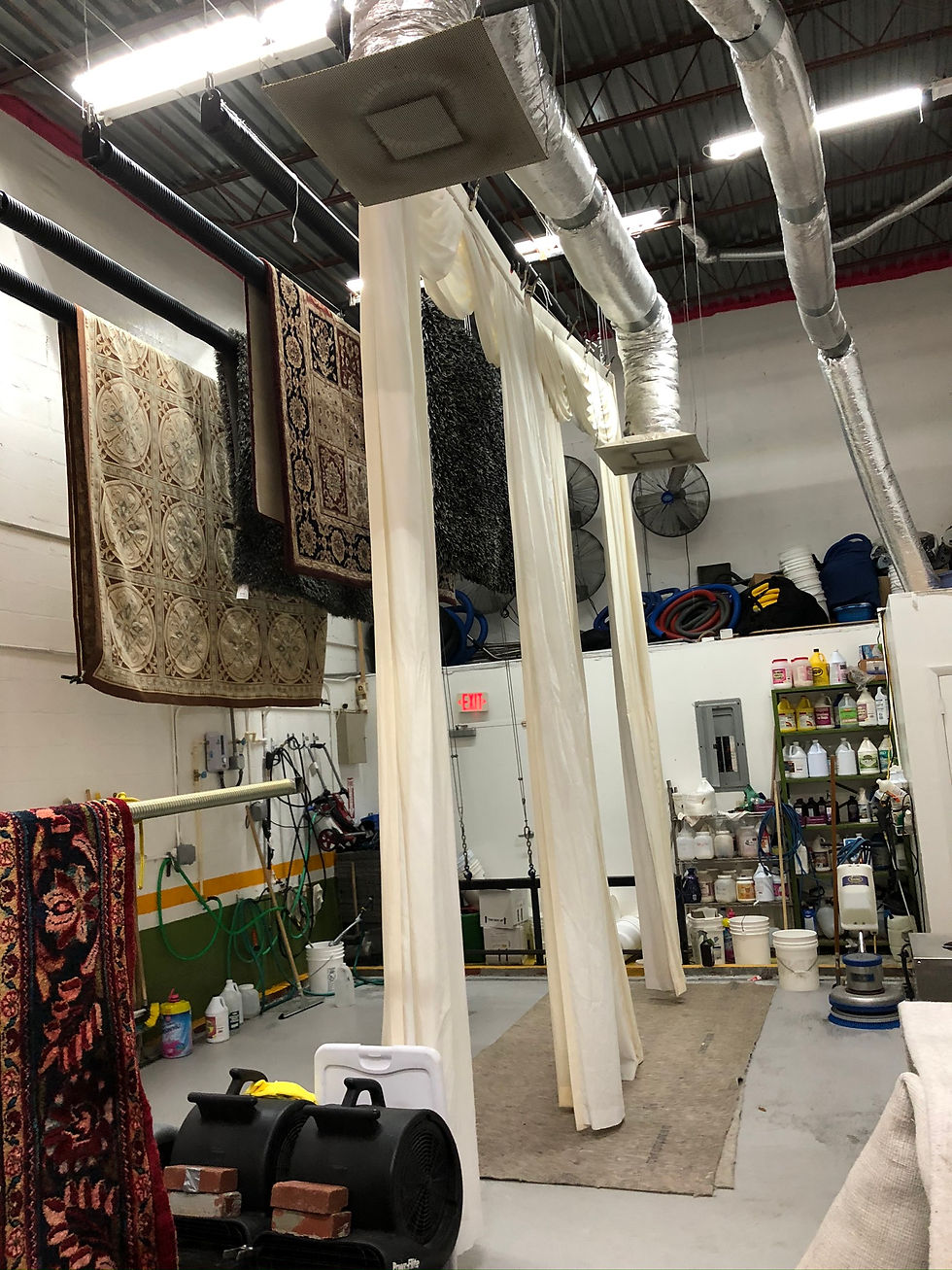
Fiber identification is the first and most critical step. Before we touch a curtain, we identify exactly what it's made of, because that determines everything: which cleaning method to use, what products are safe, what temperatures are appropriate. Getting this wrong is how damage happens.
From there, we use pH-neutral cleaning products specifically formulated for drapery and delicate fabrics, not the generic solutions you'll find at a hardware store. These products clean effectively without stripping the fibers or leaving harmful residue.
Finally, there's the finishing work: professional ironing, steaming, and re-pleating. This is what makes the difference between curtains that look "cleaned" and curtains that look restored. Getting the pleats right, the drape correct, the fabric smooth, that's a skill that takes years to develop.

What About Dry Cleaning?
Dry cleaning can be a good option, but it genuinely depends on the fabric. For some materials, it's the right call. For others, it's unnecessary or even inappropriate. There's no universal rule here, which is exactly why knowing your fabric type matters so much before making any cleaning decision.
How Often Should You Actually Be Cleaning Your Curtains?
Most homeowners are shocked by this answer: every 3 to 5 years under normal conditions. And yes, many people go far longer than that without even thinking about it.
The exception is if you've had water damage, pet accidents, or any other incident that requires immediate attention.

Your Curtains Could Be Adding to Indoor Allergies
Here's something most people never connect: if you've noticed more dust around the house, a runny nose, watery eyes, sneezing, coughing, or worsening allergies, your curtains could be part of the problem.
Curtains are essentially large fabric filters. They trap dust, pollen, pet dander, and other allergens over time. When they're full, those particles get redistributed into the air every time someone walks past or a breeze moves through. Regular cleaning isn't just about aesthetics, it's about the air quality in your home.
The One Thing We Want Every Homeowner to Know
After twenty years in this business, if there's one piece of advice we'd give before you touch your curtains, it's this:
When it comes to drapery and blinds, call a professional.
Not because we're trying to drum up business, but because curtains are a bigger investment than most people realize, and the risks of DIY cleaning are real. Shrinkage, discoloration, yellowing, permanent wrinkles, these are outcomes that could have been avoided with one phone call.
Your curtains frame your home. They deserve to be treated with care.
American Steamers has been cleaning delicate textiles and draperies since 2006. If you have questions about your curtains or want to schedule a professional cleaning, get in touch with our team.